Battle Plan for the New Lepanto: Devotion to the Sacred Heart of Jesus, the Immaculate Heart of Mary & the Divine Mercy
“Now the prince of this world will be cast out.” (Jn. 12:31)
Pope Saint John Paul II in his encyclical, Dives in misericordia, saw clearly the battle that lay ahead for a creation of a “civilization of love” and the means to achieve it. He wrote: “…at no time and in no historical period -especially at a moment as critical as our own – can the Church forget the prayer that is a cry for the mercy of God amid the many forms of evil which weigh upon humanity and threaten it…These ‘loud cries’ should be the mark of the Church of our times, cries uttered to God to implore His mercy, the certain manifestation of which she professes and proclaims as having already come in Jesus crucified and risen, that is, in the Paschal Mystery…of that love which is more powerful than death, more powerful than sin and every evil, the love which lifts man up when he falls into the abyss and frees him from the greatest threats.” (DM #15)
On October 7, 1571, military genius and ardent Catholic Christian, Don Juan of Austria, executed his great battle plan for the defeat of the Turks in the naval battle of Lepanto. Not only did Don Juan direct the combined fleets of the papacy, Spain, Venice and Genoa, but he placed them under the protection of the sacraments and the Blessed Virgin Mary. With crucifixes affixed to the mast of each ship and rosaries being recited throughout Christendom, the victory was theirs.
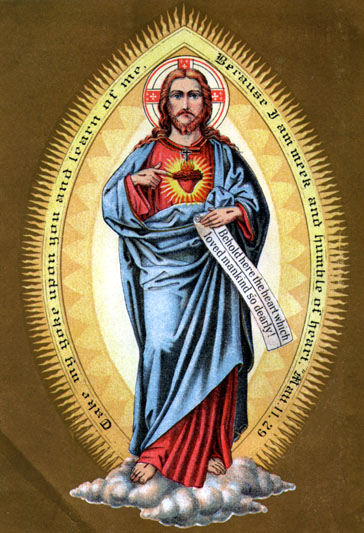
Now in the beginning of the third millennium of Christendom, the battle plan for the victory of Christianity over evil has been revealed to two nuns and three children: Saint Margaret Mary and devotion to the Sacred Heart of Jesus; three shepherd children of Fatima, Lucia, Francisco and Jacinta, and devotion to the Immaculate Heart of Mary; and Saint Faustina Kowalska and devotion to theDivine Mercy.
Jesus himself offered the Father praise for revealing hidden things to the merest of children. So it is with these revelations given from heaven to two religious sisters and three little children. God’s ways are not our ways. If we accept these messages from heaven, confirmed by the Church for their conformity to Sacred Tradition, then we, too, can gain wisdom that is considered foolishness by the world, but which can lead to salvation for ourselves and for that world. We would not want to stop at mere externals or sentimental enthusiasm for each devotion because each of the messages has an essence that guides us up the Christological ladder to holiness with true devotion and total consecration of our entire spiritual lives. The pious practices that are associated with each devotion dictated from heaven – for example, recitation of the rosary, adoration of the Sacred Heart in the Blessed Sacrament, and sacramental confession on the feast of Divine Mercy – are spiritual weapons and training practices that we can depend upon.
Each of the devotions begins in the human heart. “If only God would so seal my heart that nothing would ever enter there but his divine love, and nothing open it but charity.” So wrote St. Francis de Sales (XV, Letter 4/3/1611) expressing his personal conviction that holiness is developed in the human heart, and particularly in one’s own. Through each devotion a person may freely consecrate his life, his being, and his heart to Divine Love. Each of these devotions has its Biblical roots in the sacrificial outpouring of love from the pierced and Sacred Heart of Jesus, offered once and for all on the Cross, and offered each moment of the day at the elevations of the Eucharist in the Holy Sacrifice of the Mass. If devotion to the Sacred Heart and to the Divine Mercy are directly related to Jesus’ sacrificial death, devotion to the Immaculate Heart of Mary is related to her simultaneous and compassionate sacrifice as she stood beneath the Cross, and her role as spiritual mother to each and every person. Each devotion, properly understood, begins in the interior of the person, forms a bond of love and a transforming relationship to the Sacred and Immaculate Hearts, and ends, ultimately in the transformation of others’ lives and, consequently, in the transformation of the “culture of death” into the “culture of life and love’. As Pope Saint John Paul II said in his homily for the canonization of St. Faustina: “Divine Mercy reaches human beings through the Heart of Christ crucified…And is not mercy love’s ‘second name’ (cf. DM #7), understood in its deepest and most tender aspect, in its ability to take upon itself the burdens of any need and especially, in its immense capacity for forgiveness? …It is not easy to love with a deep love which lies in the authentic gift of self. This love con only be learned by penetrating the mystery of God’s Love.” (April 30,2000) Through the Divine Love expressed in mercy, both received and given to others, the final goal, then, is the creation of a “new heaven and a new earth”. In this battle plan of Divine Love and Mercy the most spectacular strategy is not only our own conversion, but forgiveness and conversion of the “enemy”. It is a battle for souls that ends in an era of peace.
Because mercy is the greatest attribute of Divine Love – the Latin word, misericordia, having for its origins “merciful heart” – it is not surprising either that the culminating gesture of God’s mercy was made in revealing devotion to the Divine Mercy in the 20th century to Saint Faustina Kowalska. We need only to recognize our need for mercy and to have the faith and trust to accept that mercy. We need only to become little children like the seers of Fatima, like St. Margaret Mary and St. Faustina Kowalska. Then we, too, can become part of this battle; we can learn and live these devotions to the Sacred Heart of Jesus, the Immaculate Heart of Mary and the Divine Mercy, believing and trusting that THE BATTLE BELONGS TO THE LORD.
Francis de Sales: Easter, The Agony and The Ecstasy
“As the Father has loved me, so have I loved you; abide in my love… If you keep my commandments, you will abide in my love… I have said these things so that my joy may be in you, and that your joy may be complete. This is my Commandment, that you love one another as I have loved you. No one has greater love than this, than to lay down his life for his friends.” (Jn.15: 9-13)
Jesus’ passion and death is the true school of love. Francis de Sales ends his Treatise on the Love of God writing of its power and importance to our own eternal destiny: “Now, in conclusion, the Death and Passion of our Lord is the sweetest and most compelling motivation that could possibly animate our hearts in this mortal life: and it is the truth that mystic bees make their most excellent honey in the wounds of this Lion of the tribe of Judah, his throat slit and torn to pieces on the mount of Calvary; and the children of the Cross are glorified in their wonderful problem, that the world does not understand: from death, comes the substance of our consolation; and from death, stronger than all, comes forth the sweetness of the honey of our love.” (TLG BK XIII; XIII) Living each day well demands a life of self-sacrifice and discipline and love. Jesus died on the Cross to open the gates of heaven to us, but they are narrow gates. To be judged worthy of heaven, we must love. Faith opens many doors, but it is up to each one to pass through them. Francis continues: “You must choose, O mortal one, in this mortal life, either love eternal, or death eternal; the ordinance of the Great God allows not for any compromise.” (TLG BK XII: XIII)
Heaven. Resurrection. Ecstasy. Glory. All are possible for all. But the choice remains ours. Pope Saint John Paul II, looking forward to the new millennium and his program for Church renewal in his encyclical, Novo Millennio Ineunte, wrote:
“As on Good Friday and Holy Saturday, the Church pauses in contemplation of his bleeding face, which conceals the life of God and offers salvation to the world. But her contemplation of Christ’s face cannot stop at the image of the Crucified One. He is the Risen One!… Two thousand years after these events, the Church relives them as if they had happened today. Gazing on the face of Christ, the Bride contemplates her treasure and her joy… Heartened by this experience, the Church today sets out once more on her journey, in order to proclaim Christ to the world… ‘He is the same yesterday and today and forever.‘ (Heb. 13:8)” (NMI #28) And what was Pope Saint John Paul II’s program? Holiness. Schools of Prayer. The Spirituality of Communion. The Path of the Gospel. “…until the heart truly falls in love.” (NMI #33)
And this is exactly the same program Saint Francis de Sales pointed out. Falling in love with God. This is what he wrote about in the Treatise. This is what he wrote about in the Introduction to the Devout Life. The long journey to holiness. This is what he preached, lived, and died for. This is his Easter message:
LIVE JESUS! I love Jesus! Live Jesus whom I love! I love Jesus, who lives and reigns from age to age! Amen.
HAPPY EASTER!
Francis de Sales: Holy Week, The Agony and the Ecstasy
“Do not weep.”
“You are now filled with sorrow; but I will see you again …and your heart will rejoice, and no one will take away your joy.”
“In contemplating Christ’s face, we confront the most paradoxical aspect of his mystery, as it emerges in his last hour, on the cross.” So writes Pope St. John Paul II in his encyclical, Novo Millennio Ineute. He continues, “We shall never exhaust the depths of this mystery. All the harshness of the paradox can be heard in Jesus’ seemingly desperate cry of pain on the cross: ‘My God, my God, why have you forsaken me?’ (Mk. 15:34) Is it possible to imagine a greater agony, a more impenetrable darkness?” (NMI #25) In gazing at his sorrowful face, John Paul II invites us to probe further into the mystery: “Jesus’ cry on the cross, dear brothers and sisters, is not the cry of anguish of a man without hope, but the prayer of the Son who offers his life to the Father in love, for the salvation of all.” (NMI #26)
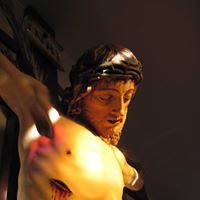
As we gaze at the face of the dying Savior we see, beneath the thorn-crowned head and disheveled hair, his expression of unfathomable sorrow; the drops of blood pooled and dried in the creases of his pallid skin; his bruised cheek, his cracked lips, his parched tongue; the yellowish spittle trapped in his beard… For over two millennia, souls have looked into this face of sorrow to find the meaning of suffering and death, to trace a path of trust in the Father’s divine ordinances, and to receive consolation in their own agony.
The reality and inevitability of suffering and death, for those we love and for ourselves, are not subjects that we often choose to ponder, but as we enter into Holy Week, it might be well to look into the mirror of Christ’s Holy Face and see there, not only the depths of his suffering, but also the depths of his trust in the Father’s goodness and of his love. Once again, we turn to Francis de Sales. Christ’s crucifixion and death were the center of his earthly existence and the hope of his future glory. Francis, with holiness of insight, optimism of faith, and common sense, dares to guide our more timid spirits into realities we might prefer to avoid.
The young Francis was not immune from the fear of death. As a seventeen year old student in Paris, he worried about the possibility of being predestined to damnation – he was, in fact, in a state of clinical depression. Yet in his darkness, he turned for answers to his Crucified Lord, and wrote, “Oh Love, Oh Charity, Oh Beauty… am I never, then, to enjoy Thy delights? …But did not my sweet Jesus die for me, as well as for the rest? Ah, be it as it may, Lord, if I cannot love Thee in the next life, since no one praises Thee in hell, may I at least profit by all the moments of my short existence here to love Thee!” (Robert Ornsby, Life of St. Francis de Sales, p.6) As always, Francis had recourse to prayer, and it happened that after a heartfelt and desperate recitation of one Memorare, he was cured.
Several years later, as a university law student, Francis again came face-to-face with death. “Whilst at Padua, he was attacked by a violent fever, which brought him to the brink of the grave…” his biographer relates. However, in this instance, Francis displayed a now heroic acceptance of an early death. “When asked by his tutor what were his wishes with regard to his funeral, he replied that he had only one request to make, which was, that his body might be given to the medical students for dissection.” (Ornsby, LSFS, p.16) If he was never to be useful to the world by using his knowledge and talents, at least his cadaver could serve some useful purpose. Throughout his illness and in imitation of his Savior, he would only say, “Thy will be done.” Miraculously, he recovered.
If Francis was resigned to his own death, it was not without emotion that he embraced the death of those dear to him. When his youngest sister, Jeanne, died at the age of fourteen after a brief, but fatal illness, Bishop Francis wrote to the Baroness Jane de Chantal, who had been caring for her, “Alas! My daughter, I am nothing other than human; my heart has been touched more than I had ever thought to be possible …But as for the rest – blessed be Jesus! I will always take the part of Divine Providence: it does all and disposes of all for the best …in the midst of my heart of flesh, which has felt this death so deeply, I am very sensible of a certain sweetness, tranquility, and restfulness of mind in the thought of Divine Providence, which produces throughout my soul a great consolation in the midst of its grief.” In this same letter, Francis continues to give evidence of the firm foundation of his faith in Divine Providence as he advises her, “No, my dear daughter! We must not only agree that God should strike us, but also that he should do so wherever it may please him: we must leave the choice to God, for it belongs to him.” Here we might say, like the apostles, “this is a hard saying“; yet Francis, like his Lord and Master, does not back down: “Oh Lord Jesus! Without reserve, without if, without but, without exception, without limitation, may thy will be done upon father, mother, daughter, in all and throughout all. Ah! I do not say that we must not desire and pray for their preservation: but to say to God – leave this and take that – is a thing we must never say.” (Letter, 11/1/1607)
We see Francis most stricken on February 25, 1610, when he received word that his mother had suffered a stroke. Francis, now the Bishop of Geneva, raced to the family castle on horseback, accompanied by a physician and an apothecary, to be at her side. She could not see, but she recognized his voice, and felt for his hand to greet him as her bishop. Thereupon, as Reverend Harold Burton writes in his The Life of St. Francis de Sales, she embraced him, “putting her arm around his neck, she drew his head down towards her and gave him her mother’s kiss upon his lips. ‘This one’, she said, ‘this one is both my son and my father.’ ” After keeping vigil at her side for two days, she died. “Francis closed the eyes of his beloved mother with his own hands, blessed her and kissed her for the last time, and then gave free course to his tears.” (Burton, LSFS, pp. 503,504) On this occasion, he once more wrote to his friend, the Baroness de Chantal, attesting to both his peaceful grief at the loss of his saintly mother and his entire resignation to God’s will. Madame de Chantal herself had just experienced a tragic loss in the death of her youngest daughter, Charlotte. Francis alludes to her suffering in this same letter: “Our poor little Charlotte is happy, indeed, to have quitted the earth before really coming in contact with it. And yet, alas! We cannot but weep over her somewhat, for is not our heart a human heart and our nature one that feels?” (Burton, LSFS, p .504) Francis does not deny sadness in times of bereavement, but sees everything through the eyes of eternity, and in this is his consolation and peace.
When Jean Deage, his faithful tutor, died on June 8, 1610 – just two days prior to the foundation of the Visitation Order – Francis was once again overcome by grief. While he was saying a requiem mass for the repose of the soul of this cranky, exacting, and loyal friend, Francis was struck speechless as he came to the Pater Noster. After he had regained his composure and finished saying the prayer, he still could not restrain his tears. Later on, he explained to his chaplain that it was only as he began the Our Father that he suddenly remembered that it was Monseigneur Deage who had first taught it to him in his childhood. (Burton, LSFS, p. 507)
Francis had a heart of flesh. He loved his sister, his mother, his tutor, but – and this was the source of his peace – he loved them all in God and for God, and he loved God above all of them. God is always good. This faith penetrated to the marrow of Francis’ bones, or rather, to the center of his heart. God only wants good for us. God did not create death. Death came through sin. But Jesus, by his suffering and death, vanquished sin. By means of dying on the Cross out of love for us, death is put to death. (Rom. 5-6) And so, as we contemplate the face of the Crucified One with the eyes of faith, we see not only death, but life and resurrection. The Agony and the Ecstasy.
This is why Jesus could tell the widow of Naim, “Do not weep.” (Lk. 7:13) He approached the funeral litter carrying her only son, touched the litter, and spoke this word: “Young man, I bid you, get up.” The grieving woman no longer had a reason to cry because the God who made the universe had just raised her son back to life. This is also why Jesus could tell his apostles at the Last Supper on the eve of his Passion, “You are now in pain, but I will see you again, and your hearts will rejoice and no one will take away your joy.” (Jn. 16:22) Not only will Jesus from the dead three days after his crucifixion, but the apostles, too, will not be overcome by death.
Once we believe – that we were created by a God who loves us, saved by a God who loves us, and destined by him for eternal happiness – we, too, can be brave. We can weep and then dry our tears. We can pray for those we love to be healed. We can call the doctor and the pharmacist and the priest. We can stay by their bedside, and if death should come, we can weep and pray.
As for our own death, in his sermon of March 10, 1622, Francis tells us, “we must, then, fear death and not fear death,” and that, “we must fear it with a fear that is both tranquil and full of hope, since God has left us so many means to die well. Among others He has left us that of contrition, which is so general (that is perfect contrition) that it can erase the guilt of all kinds of sin.” We can fear death and not fear death by living each day well, as if it were our last; and in this way, we can prepare for death. In this same sermon, Francis tells a little story to show us how. He tells us that a Police Inspector was sent by the King of Spain to investigate the conduct of all the police of a particular province. All of them were on the take, except one. His long record of service was impeccable. When he was asked how he could have maintained such a spotless record amid so much corruption, the policeman simply told the inspector that he always knew that someday, one day, he would come – and so he lived each and every day as if it were the day of the investigation. This was his secret. “As our life is, so will be our death. So, to sum up this point, let us say that the general rule for a good death is to lead a good life. It is true that even while living well you will fear death, but your fear will be holy and tranquil, relying on the merits of our Lord’s Passion, without which death would certainly be dreadful and terrifying.” Live each day well. This was Francis’ secret. It could be ours.